Jessica Southgate
How overseas experience has broadened horizon, greater connection and influenced career development.
"Building Bridges, Building Perspective: Growth and Impact from Rwanda"
What does it mean to work at a foundation-owned business? And
What does purposeful, impactful work really feel like in practice?
At Ramboll, we take pride in the impact our designs make every day. But there are rare moments when that impact becomes tangible when you are involved in a project from start to finish, and you can see, feel, and experience the difference it makes to people’s lives first-hand. Those moments often leave the deepest mark.
That was the case for Jessica Southgate, a GIS consultant based in Ramboll’s Newcastle office in Australia, who recently returned from Rwanda after taking part in a Fika (formerly Bridges to Prosperity) project alongside colleagues from Ramboll offices around the world.
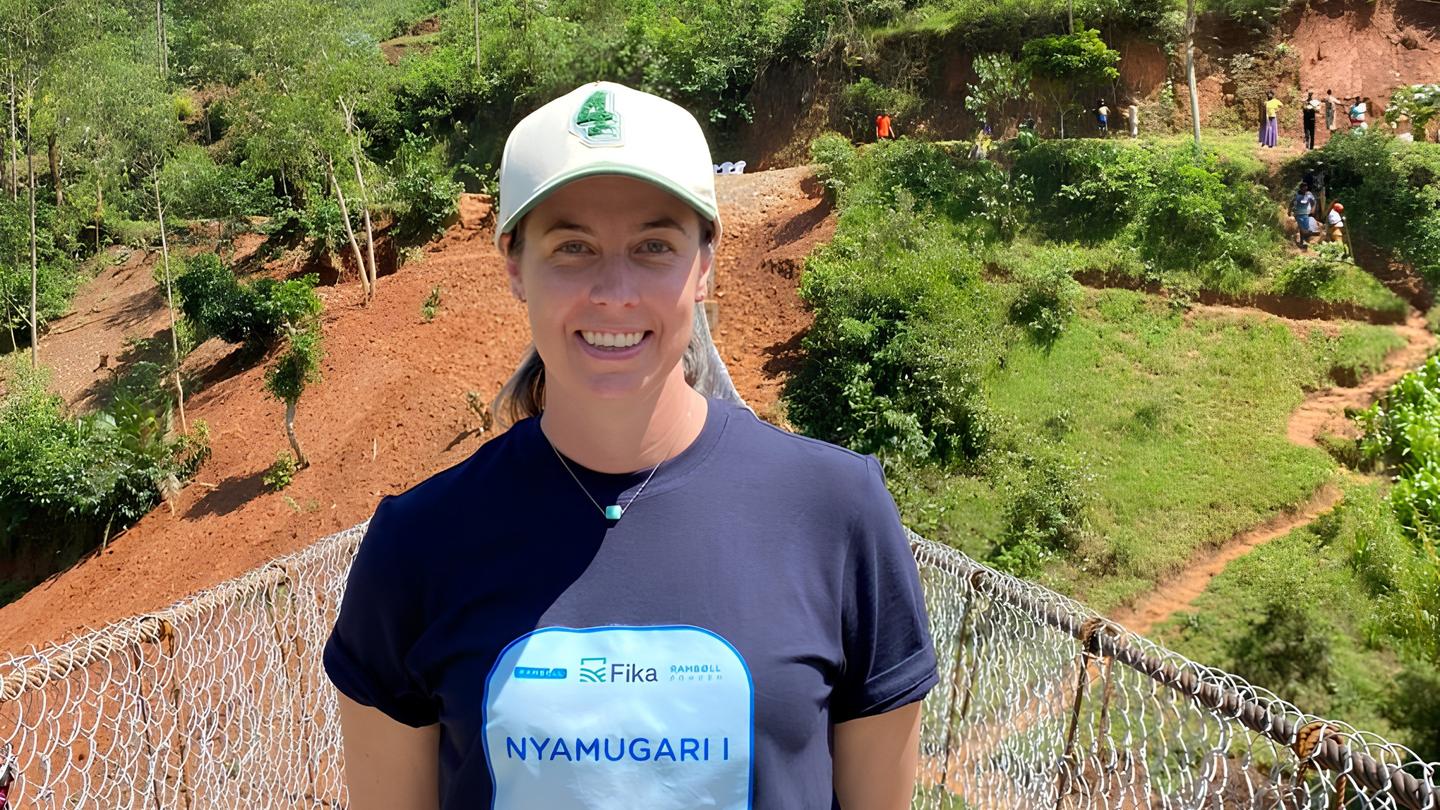
Fika is a non-profit organisation dedicated to ending rural isolation by building safe, climate-resilient trail bridges in underserved communities restoring access to healthcare, education and economic opportunity where rivers and terrain would otherwise cut people off for months at a time. Through support from the Ramboll Foundation, Ramboll partners with the organisation to deliver these projects, with employees participating in deployments each year—stepping beyond their day-to-day roles to work alongside local communities and apply their skills where they can create immediate, visible impact, reinforcing the belief that the most meaningful engineering happens when technical expertise meets real human need.
Q1: What did the Rwanda experience involve and what stood out most to you?
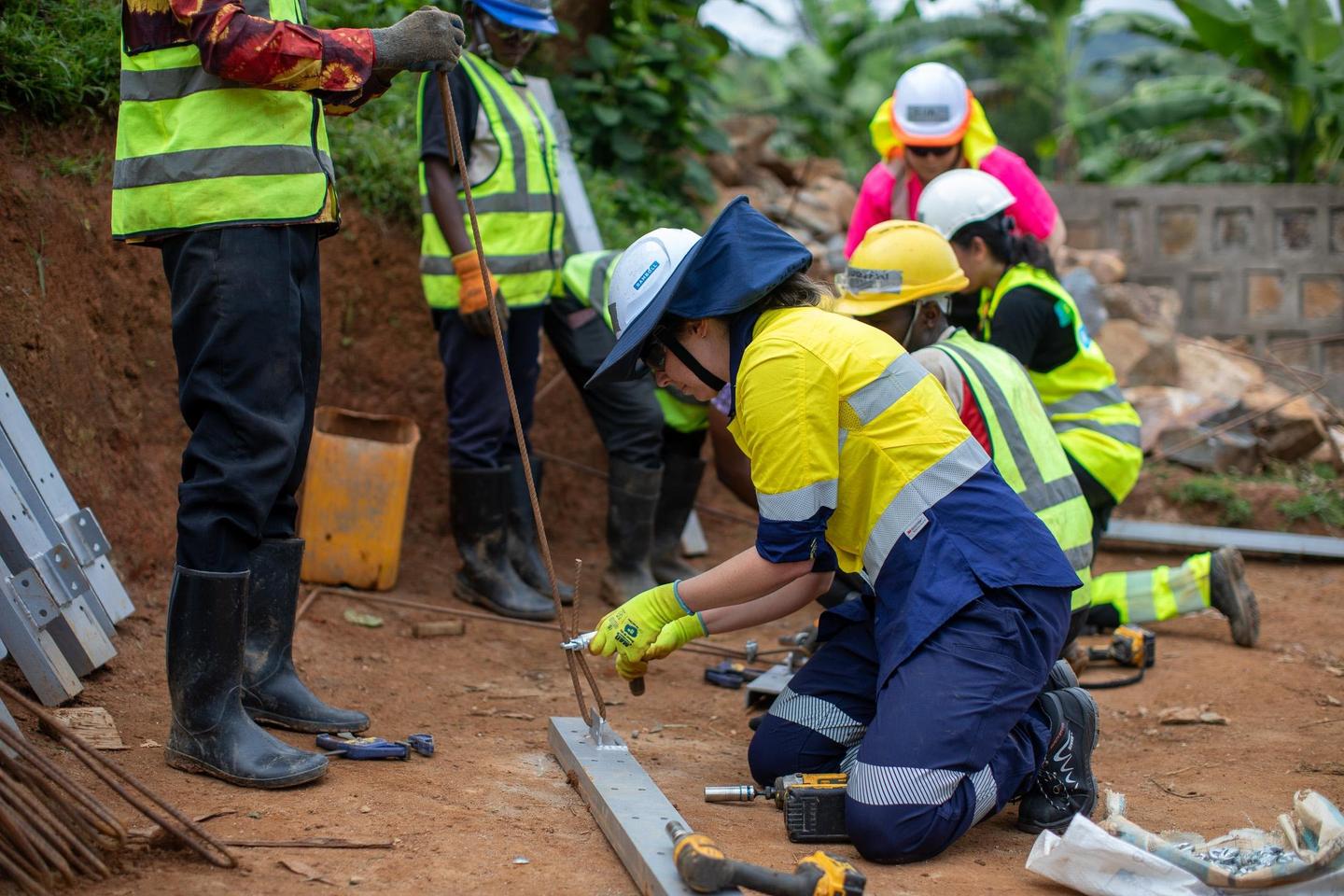
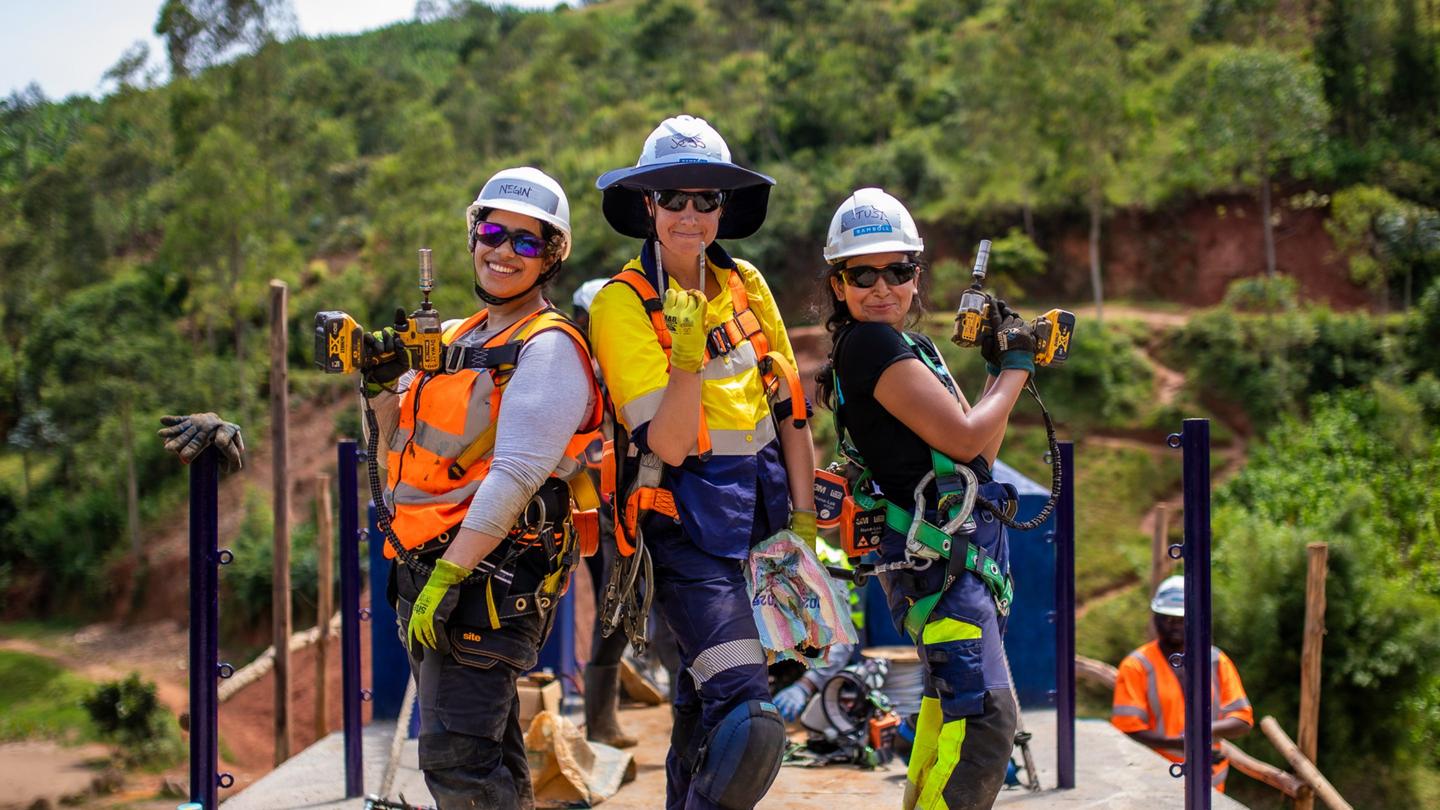
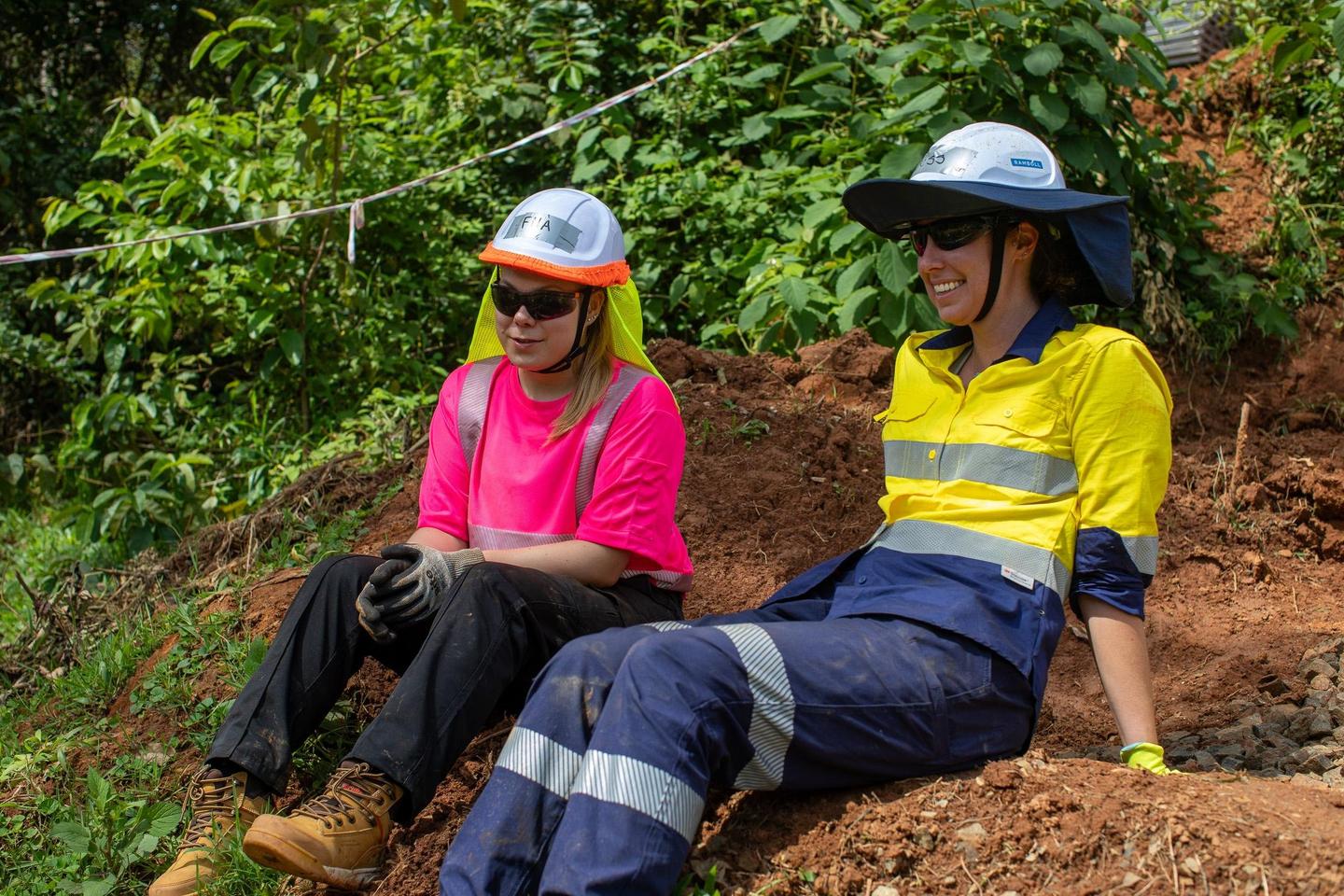
The experience of building the Nyamugari I suspension bridge in Rwanda's Karongi District was one of the most meaningful of my professional career. I served as the logistics lead as part of a nine-person Ramboll team, working alongside the Fika team and the incredible local community over two weeks. Every person brought something essential to the table — whether that was structural knowledge, hands-on construction experience, or simply an incredible work ethic and community spirit.
From a technical standpoint, it was a completely different world from my usual office-based work. I got hands-on experience with on-site labouring, learning how to build a bridge by hand from the ground up. As someone who typically works with data and spatial analysis, seeing construction principles applied in a resource-constrained environment without the equipment and infrastructure we take for granted gave me a much deeper appreciation for pragmatic, practical problem-solving. It's one thing to analyse and map infrastructure from a screen; it's another to physically build it with your hands in the field.
But the real significance of the project was what the bridge represented. The bridge we built wasn't just a structure it was access. It meant community members could reach medical centres, markets, and schools safely during the wet season, when those routes would otherwise be impassable. Seeing the direct, tangible difference a piece of infrastructure makes to people's daily lives really reframed how I think about the purpose of my work as a geospatial consultant.
What surprised me most was how quickly a group of people from completely different backgrounds and cultures Ramboll colleagues, Fika colleagues, and local community members came together and functioned as one cohesive team. Living together for two weeks fast-tracked relationships that would normally take years to build in a typical office setting. Saying goodbye at the end was genuinely hard.
The biggest takeaway overall is that the most meaningful work happens when technical skill meets real human need and that collaboration, adaptability, and humility matter just as much as expertise on the ground.
Q2: How did working in that environment change your approach to problem-solving and collaboration?
One of the most significant mindset shifts I took away from Rwanda was around pace and collaboration. In our day-to-day work, there's often a strong sense of urgency deadlines, deliverables, and the pressure to move fast. What this trip taught me is that we can sometimes be too urgent, and that slowing down can actually produce better outcomes.
Working alongside local community members and a diverse international team, I noticed that a more deliberate, considered pace allowed people to genuinely collaborate rather than just execute. Decisions were made together, knowledge was shared more openly, and the team felt more invested in the outcome as a result. Everyone's contribution mattered and was given the space to be heard.
This is a mindset I hadn't fully developed through my regular work. In a typical professional environment, efficiency is often rewarded over process, and collaboration can sometimes become a checkbox rather than something that's truly practised. In Rwanda, real collaboration wasn't optional it was the only way the project worked, given the mix of cultures, skill sets, and contexts involved.
I'm bringing back a conscious reminder to pause more, listen more, and create space for others in my work. Not every problem needs to be solved at speed, and the quality of both the solution and the relationships built along the way are often much stronger when you take the time to work with people rather than just alongside them.
Q3: In what ways did the experience push you beyond your comfort zone?
Though I personally don’t feel as though I am still in the early days of my career, this experience pushed me outside my comfort zone in ways I didn't fully anticipate — and that in itself was a valuable reminder that growth doesn't have a career expiry date.
The most stretching part wasn't the professional or organisational side of things — it was the physical work itself. As a geospatial scientist who spends most of their career thinking and problem-solving at a desk, getting on site and building a bridge by hand was a completely new challenge. It required a different kind of resilience, patience, and learning from scratch — humbling in the best possible way.
From an adaptability and problem-solving standpoint, working physically alongside community members and a diverse international team highlighted how differently people approach and process ideas. The best outcomes came from genuinely blending those perspectives rather than leaning on any one person's expertise or training. That has made me more consciously open to slowing down and inviting different viewpoints before landing on a solution.
If anything, having the professional background I do made the lessons land more meaningfully — stepping outside that comfort zone with fresh eyes, gave me a much richer appreciation for what I don't know and how much there is still to learn.
Q4: How did this experience change how you think about technical excellence and impact?
Experiences like Rwanda are a powerful reminder of why I got into my field in the first place. On the day-to-day, it can sometimes feel like you're a cog in a much larger corporate machine — moving through tasks, hitting deadlines, and losing sight of the bigger picture. This trip cut straight through that and reconnected me with something more fundamental: that the work we do has the ability to genuinely change people's lives.
Seeing a community gain safe access to medical centres, schools and markets because of something we built with our own hands was deeply motivating. It reframed what "impact" actually means — not as a word in a company strategy document, but as something real and visible in front of you.
Looking ahead, that feeling is something I want to hold onto and actively seek out in my work. As a geospatial scientist, I'm aware of how powerful spatial data and analysis can be in understanding and addressing real-world challenges — from infrastructure planning to humanitarian response. This experience has made me more intentional about wanting to apply those skills in contexts where the outcomes genuinely matter to communities and society.
It also shapes how I want to show up as a professional — bringing the same collaborative, grounded mindset I found in the field into my everyday work, and advocating for projects that create meaningful outcomes beyond just the client deliverable.
Ultimately, Rwanda reminded me that we have real agency to do good in the world through our work — and that's a motivation I don't want to let fade back into the background.
Q5: How has this experience shaped your outlook for the future?
Before Rwanda, I think I unconsciously treated technical excellence as the primary measure of good work — doing the analysis well, delivering accurate outputs, meeting the brief. Purpose and impact were there in the background, but they weren't something I actively weighed against the technical side of what I was doing.
This experience shifted that balance for me. Watching a bridge get built by hand in a rural community and understanding what that structure meant for the people who would use it every day, made it clear that technical excellence is really only meaningful when it's in service of something that genuinely matters.
As a geospatial scientist, I work with tools and data that can be enormously powerful in the right context. Rwanda made me more conscious about wanting to direct that capability towards work where the impact is tangible and human — whether that's infrastructure, environmental challenges, or community-level planning.
Going forward, I want to hold both things together intentionally. I don't want to compromise on technical accuracy — that's what makes the work credible and trustworthy — but I also don't want to pursue technical excellence in a vacuum. The question I want to keep asking myself is not just "is this work good?" but "is this work good for something?"
Want to know more?
Jessica Southgate
Senior Consultant
+61 2 4962 5444