Ramboll
March 18, 2026
Ramboll strengthens operational foundation in a challenging year
The global architecture, engineering, and consultancy company strengthens its operational foundation in a financially challenging year improving the global knowledge platform and organisational agility while reducing complexity and costs.
In 2025, Ramboll faced macroeconomic headwinds that hampered the overall financial result.
- Ramboll’s gross revenue of DKK 17,282 million was 1.6 percent lower than in 2024 (DKK 17,555 million), while earnings (EBITA) were DKK 898 million (DKK 943 million in 2024)
- Organic growth was -2.5 pct. (+1.9 pct. in 2024)
- EBITA margin reached 5.2 pct. (5.4 pct. in 2024)
- Profit before tax for the year 2025 was DKK 405 million (DKK 584 million in 2024)
- The order book increased by 0.4 pct. during 2025, which is slightly above the order book value at the end of 2024.
The year-on-year decrease in revenue and earnings was due to a downturn in key business areas like Buildings and Architecture just as performance in Energy was negatively impacted by policy uncertainties leading to delayed or cancelled projects within the green energy transition.
To improve performance and future proof the company Ramboll launched a new operating model to simplify operations, boost agility, and reduce overhead costs, while at the same time enhancing commercial impact through increased client proximity and sector focus.
“Overall, our financial results in 2025 were unsatisfactory. We have, however, taken significant actions to improve performance as well as enhanced our competencies through the acquisition and integration of several renowned specialist companies. A key intervention was the transformation of our operating model that we implemented during 2025 which will enable us to leverage the scale of our global expertise and delivery platform to better share expertise and resources while increasing closeness to clients and organisational agility. Combined with significant cost savings and a stable orderbook in 2025 that has developed positively since the beginning of 2026, we are now better positioned for coming back to growth,” says Group CEO Jens-Peter Saul.
Despite challenging market conditions, Ramboll continued to deliver industry-leading solutions within resilience and decarbonisation. The projects spanned from large-scale transport infrastructure to more sustainable data centres, pharmaceutical facilities, power grid modernisation, urban climate adaptation, and low-carbon energy solutions.
Against overall financial results below expectations, Ramboll delivered solid growth in its business area Environment & Health, and selected sectors like Wind Energy, Rail, Data centres, and Life Science & Pharmaceuticals.
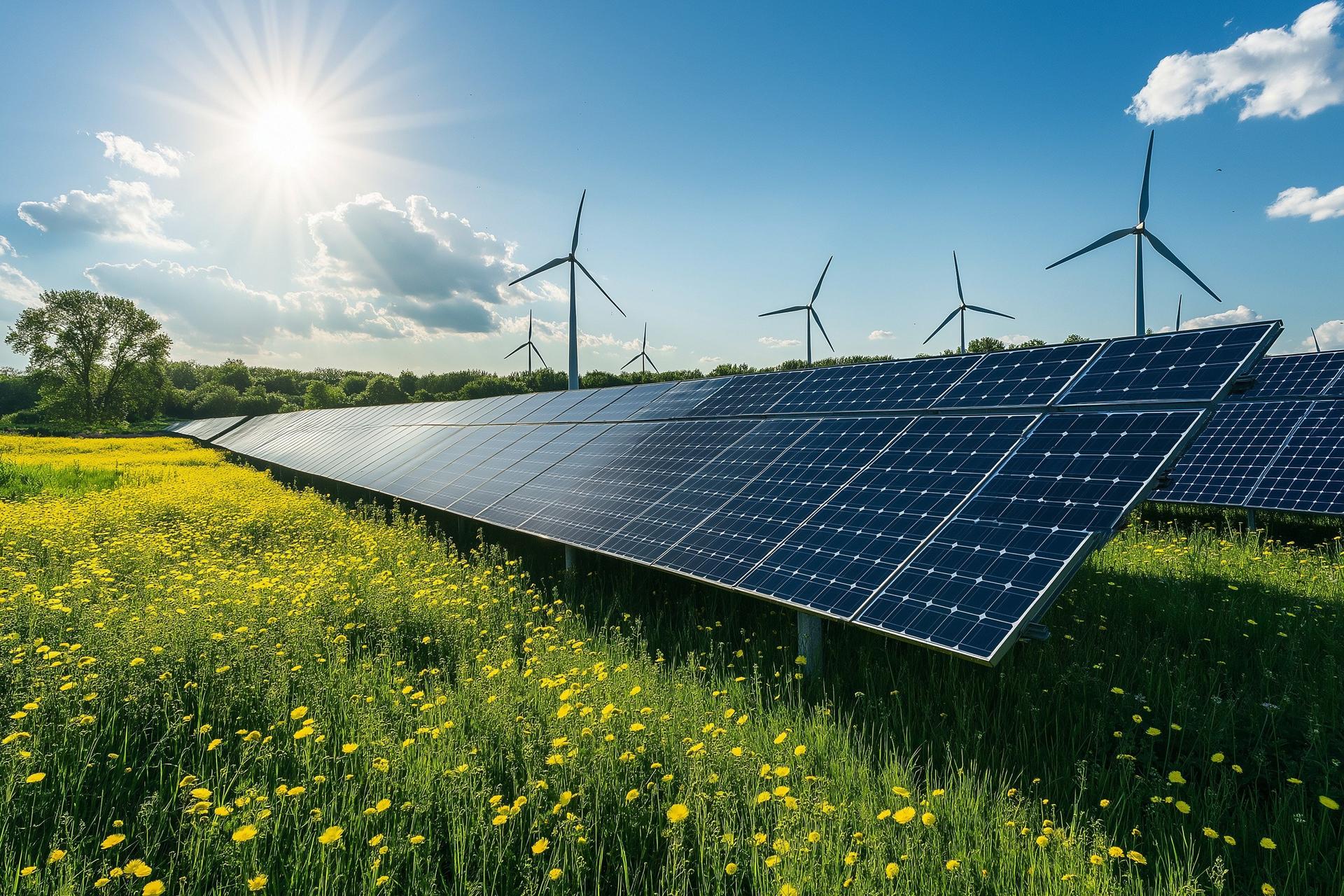
Ramboll is committed to advising clients and societies on decarbonisation and the shift to renewable energy, improved energy efficiency, advancing low carbon technologies and energy systems, as well as the decarbonisation of key sectors such as transportation and industry.
“We are convinced of the future for renewable energy. The climate crisis is not going away anytime soon. We see a long-term decarbonisation trend that will include wind energy in a mix of solar energy, battery and energy storage, and onshore wind. I believe Ramboll is much better positioned today for the next phase of the green transition, in which APAC is expected to drive the global demand for e.g. wind,” says Group CEO Jens-Peter Saul.
Along with decarbonisation, resilience remains one of the main drivers for demand of Ramboll’s advisory services enabling clients and societies to anticipate, absorb, adapt, and transform in response to change. In a world facing rising climate risks, shifting energy demands, and geopolitical uncertainty, resilient infrastructure is vital for keeping societies connected, productive, and secure.
In 2025, Ramboll’s Water business area was further strengthened by the acquisition of Envidan, adding almost five hundred world-class experts in water and wastewater management in Denmark, Norway, and Sweden. The acquisition is still subject to approval from competition authorities.
The company also acquired TransGrid Solutions, a renowned Canadian power systems consultancy, and the UK-based environment and sustainability consultancy Temple, which have been successfully integrated in 2025.
Key project wins in 2025
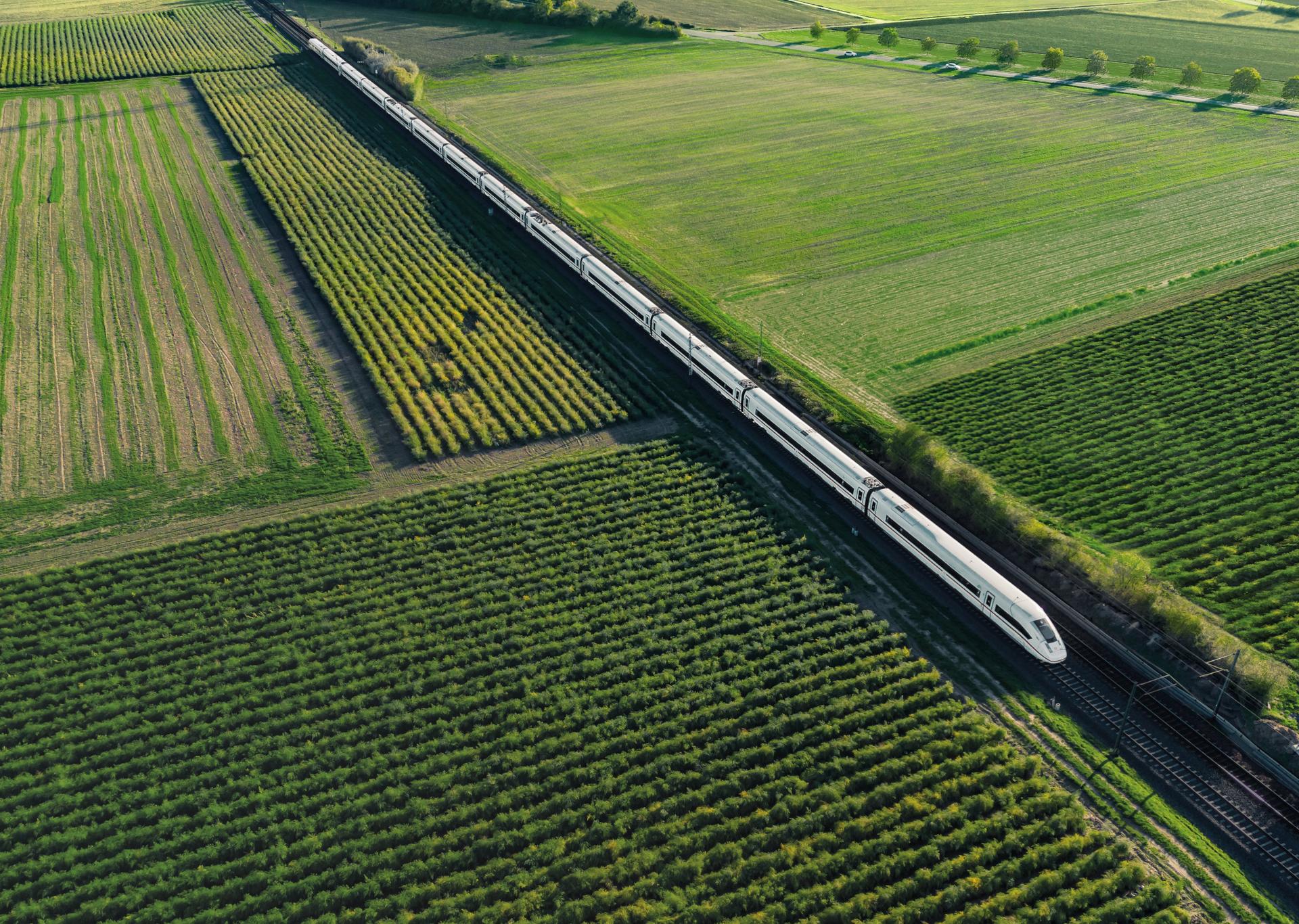
Advancing low-carbon transport in Europe. In 2025, Ramboll was selected to help design the M4 metro extension in Copenhagen’s Nordhavn district. By supporting Copenhagen’s vision of a '5-minute city', the extension promotes not only accessibility, walkability, and urban resilience; it also reflects Ramboll’s commitment to decarbonising transport infrastructure. The M4 metro line extension win is an important milestone in delivering on our global Rail sector strategy.
Scaling sustainable data centres in the US. In 2025, it was announced that Ramboll has been selected to partner with TeraWulf at their Lake Mariner campus to turn an existing coal-fired power plant site into one of the largest low-carbon data centres in the US. TeraWulf’s commitment and sizeable investment will support the acceleration of technology and further enable the growth of manufacturing in North America.
Accelerating the green energy transition in South Korea. In 2025, Ramboll provided the detailed design for the 532MW Anma offshore wind project located 40 km west of the South Korean peninsula’s southwestern coastline. When completed, the Anma offshore wind farm will produce more than 1,400 GWh of electricity every year and provide clean energy to 1.4 million South Koreans annually. The project, which will significantly contribute to South Korea’s renewable energy targets and long-term carbon neutrality goals, involves complex engineering for the foundational structures, a key technical challenge given the site-specific maritime conditions.
Supporting sustainable growth in life science and pharma. In 2025, it was announced that Ramboll will support Novonesis in Kalundborg, Denmark, with the conversion and expansion of its food‑grade manufacturing facilities, focusing on new solid and liquid filling production lines. This large‑scale initiative represents a significant win for our global Life Science & Pharma team, which brings together expertise in engineering, science, planning, design, economics, and regulatory compliance.
| Key figures and financial ratios | 2025 | 2024 | 2023 |
| Income statement, DKK-million | |||
| Revenue | 17,282.4 | 17,554.6 | 17,014.6 |
| Net project revenue (NPR) | 14,613.0 | 14,557.3 | 14,054.2 |
| Operating profit before depreciation and amort. (EBITDA) | 1,124.1 | 1,175.8 | 1,248.9 |
| Operating profit before amortisation of goodwill, brand, and customer contracts (EBITA) | 898.2 | 942.8 | 1,033.3 |
| Profit before tax | 405.1 | 583.9 | 607.4 |
| Profit for the period | 204.8 | 296.7 | 390.5 |
| Balance sheet | |||
| Total assets | 9,608.9 | 10,174.7 | 10,401.5 |
| Total equity | 3,624.6 | 3,742.0 | 3,377.9 |
| Net interest-bearing cash/(debt) | 450.7 | 469.1 | 435.1 |
| Cashflow, DKK-million | |||
| Cashflow from operating activities | 440.4 | 731.7 | 459.2 |
| Cashflow from investing activities | (258.0) | (708.5) | (417.0) |
| Investment in tangible assets, net | (128.7) | (176.4) | (239.0) |
| Cash flow from financing activities | (38.4) | (198.6) | 236.4 |
| Net cash flow for the period | 144.0 | (175.4) | 278.6 |
| Employees | |||
| Number of employees, end of period | 17,757 | 18,012 | 18,301 |
| Average number of full-time employees | 16,901 | 17,107 | 17,066 |
| Financial ratios as % | |||
| Revenue growth | (1.6) | 3.2 | 6.3 |
| Organic growth | (2.5) | 1.9 | 8.8 |
| Organic growth, Net project revenue (NPR) | (0.6) | 2.3 | 9.3 |
| EBITDA margin | 6.5 | 6.7 | 7.3 |
| EBITA-margin | 5.2 | 5.4 | 6.1 |
| Cash conversion ratio | 92.5 | 103.8 | 62.6 |
| Equity ratio (solvency ratio) | 37.7 | 36.8 | 32.5 |
| Key figures, sustainability | |||
| Total GHG-emissions Scope 1, 2 & 3 in tCO2e | 114,622 | 124,531 | 134,127 |
| Gender diversity, women % | 38 | 38 | 37 |
| Rate of recordable work-related accidents for own workforce | 1.5 | 1.4 | 1.2 |
About Ramboll
Ramboll is a global architecture, engineering and consultancy company founded in Denmark in 1945. Ramboll’s close to 18.000 employees create sustainable solutions across Buildings, Transport, Architecture & Landscape, Water, Environment & Health, Energy and Management Consulting. Across the world, Ramboll combines local experience with a global knowledgebase to create sustainable cities and societies. We combine insights with the power to drive positive change to our clients, in the form of ideas that can be realised and implemented.
Ownership
The Ramboll Foundation is the main owner of Ramboll Group, and its primary objective is to promote the company’s continuance alongside the long-term development of the company, its employees, and the communities it serves. The Ramboll Foundation owns 98 pct. of the company’s shares. The remaining 2 pct. are owned by Ramboll employees.
Want to know more?
Jens-Peter Saul
Group CEO
Eva Kienle
Group CFO