Supporting the Port of Los Angeles’ sustainability journey
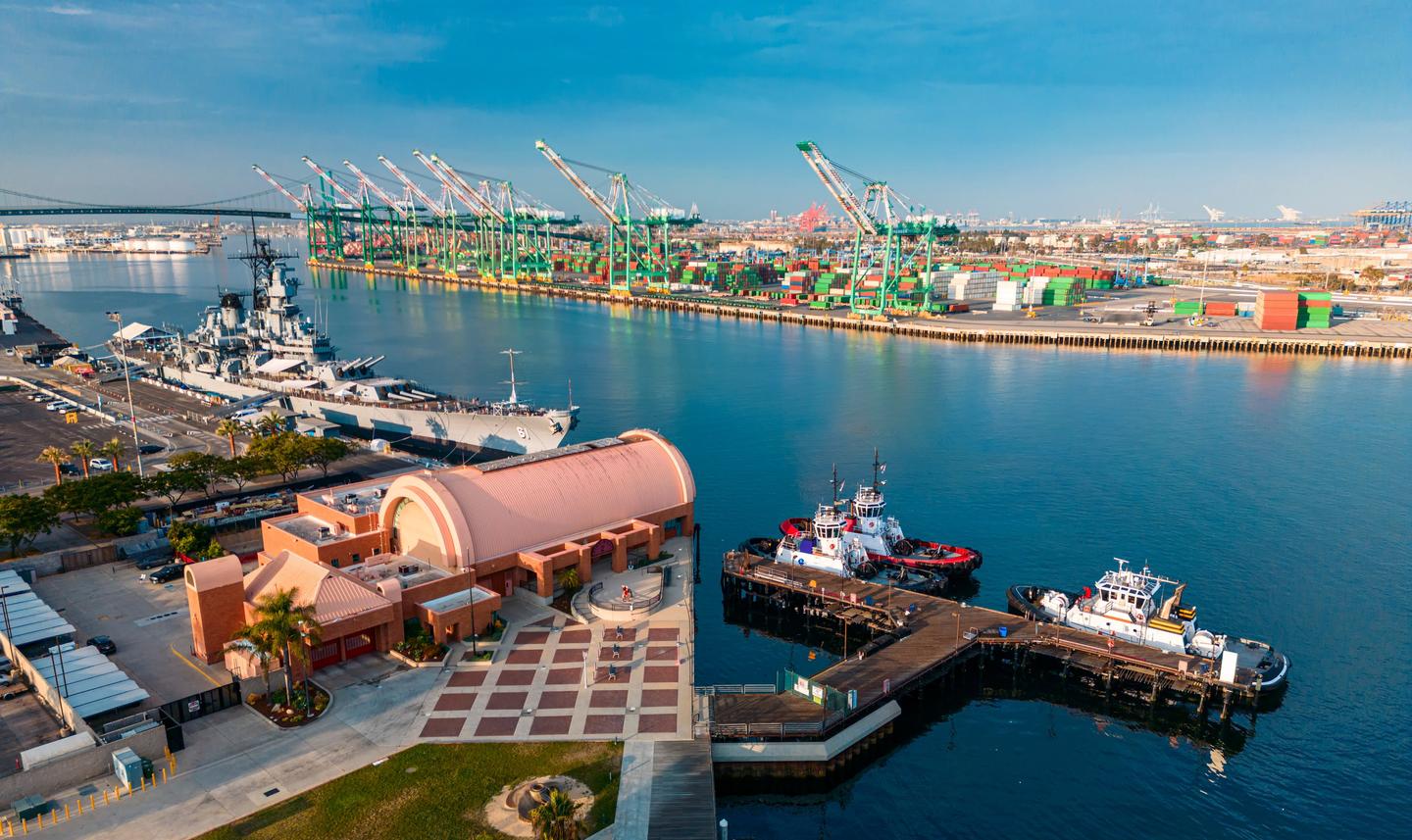
US ports are at a pivotal crossroads as they face the growing challenges presented by rising climate pressures, aging infrastructure, supply chain volatility, and domestic manufacturing goals while navigating the availability of historic public funding.
One of the busiest container gateways in the US, the Port of Los Angeles has spent over two decades pursuing emissions reduction as a catalyst for system-wide transformation. During this time, Ramboll has conducted numerous environmental impact reports (EIRs) and environmental impact statements (EISs) under the California Environmental Quality Act (CEQA) and the National Environmental Policy Act (NEPA).
Ramboll-provided EIRs/EISs have covered numerous technical areas, including air quality, health risk, GHG emissions as well as analyses for hazards, biological resources, and water quality. In each case, we developed a detailed description and evaluated all environmental resource areas. Where impacts were found, various mitigation measures were recommended for air quality, aesthetics, cultural resources, biological resources, GHG emissions, safety hazards and hazardous materials.
Analyzing low-emission technologies
We also analyzed a broad range of low- and zero-emission technologies and operational strategies, including battery and cable electric equipment, battery electric trucks, hybrid equipment, alternative fuels, including renewable diesel and renewable LNG, vessel speed reduction, barge-based emissions capture systems, and operational measures such as priority lanes and maximizing on-dock rail.
Our experts evaluated these types of innovative technologies and operational measures from a technical and operational feasibility perspective and conducted cost-benefit analyses. We have also assisted the Port with their Technology Advancement Program (TAP), which included evaluating candidate technologies and assisting in the development of demonstration programs and in-use testing protocols to determine the feasibility of specific technology.
A blueprint for the future
The progress at the Port of Los Angeles over the last 20 years showcases how pairing environmental intelligence with long-range operational planning can motivate modernization without sacrificing throughput, efficiency, or economic growth.