Search our news
Filters
Filters

Global news
June 8, 2026
Ramboll announces changes to the Group Executive Board
To enhance agility and strengthen commercial leadership Ramboll changes the composition of the Group Executive Board.
May 27, 2026
Ramboll at London Climate Action Week 2026
This June, Ramboll will participate in London Climate Action Week, one of the world's leading forums for climate leadership and action. On Wednesday, 24 June, Ramboll hosts a series of events at The Royal Institution, bringing together senior leaders from business, government, finance, and civil society to explore the partnerships and innovations needed to accelerate the climate transition. Join us to engage in high-level discussions, expand your network, and connect with Ramboll's experts as we explore practical solutions to some of the most pressing sustainability challenges.

Global news
May 19, 2026
Ramboll appointed for Phase 2 of Singapore’s Integrated Waste Management Facility
Ramboll, in joint venture with AECOM and Binnies, has been appointed by Singapore’s National Environment Agency (NEA) to deliver multi-disciplinary consultancy services for Phase 2 of the Integrated Waste Management Facility (IWMF).

Global news
May 11, 2026
Ramboll completes acquisition of Envidan - parties to begin merger implementation and immediate collaboration
With regulatory approvals secured and the transaction finalised, Ramboll and Envidan will begin merger planning and immediate collaboration to build a single Nordic water powerhouse that strengthens Ramboll’s presence globally and across Denmark, Norway, Sweden and Finland.

May 10, 2026
Ramboll is playing a central role in the second European Climate Risk Assessment (EUCRA2)
Ramboll is managing and contributing technical expertise to the European Climate Risk Assessment (EUCRA2), a 30-month programme led by the European Environment Agency. Xavier Le Den, Country Market Lead for Ramboll Management Consulting in Belgium, explains Ramboll’s role in the important programme that aims to make climate risk assessment actionable for EU institutions and member states.

Global news
April 19, 2026
Ramboll receives all regulatory approvals for acquisition of Envidan — parties to finalise transaction
Ramboll today confirms that all required regulatory approvals have been obtained for its intended acquisition of the Nordic water and wastewater specialist Envidan. With clearances in place, the parties will now proceed to finalise the transaction.
Global news
March 18, 2026
Ramboll strengthens operational foundation in 2025
The company strengthens operational foundation in financially challenging year, improving knowledge platform and agility while reducing complexity and costs.

March 9, 2026
Norra Hagastaden: Ramboll’s contribution to a vibrant sustainable district in Stockholm
Norra Hagastaden, known for its history and hospital developments, is transforming into a vibrant and sustainable district in Stockholm. Ramboll has been awarded the role of technical consultant in Region Stockholm’s long‑term development initiative, with the client Locum.

Global news
February 5, 2026
Ramboll launches first-of-its-kind European Biodiversity Metric
The European Biodiversity Metric (EBM) will provide a vital tool to assess and manage biodiversity across Europe, as well as supporting legislative compliance and advancing EU and global biodiversity goals.
Press release
January 30, 2026
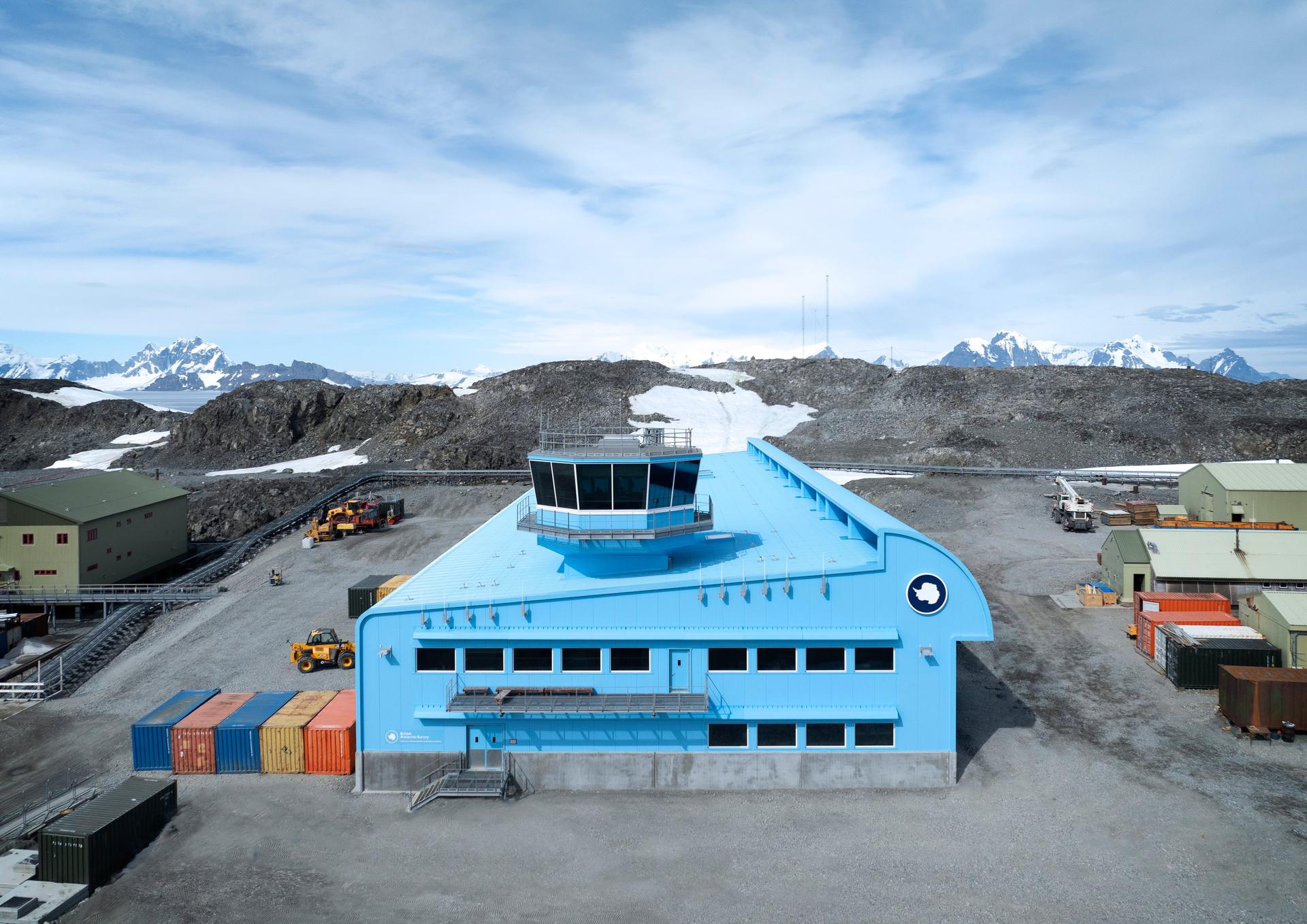
Largest UK Antarctic construction project completes on time and budget
The British Antarctic Survey (BAS) has officially opened the £100m Discovery Building at Rothera Research Station, marking the on-time and on-budget delivery of the largest construction project ever undertaken by the UK in Antarctica – a once-in-a-generation upgrade to the UK’s Antarctic research and operational capability.